TGR-63 Breaking Brain Plaques to Target Alzheimer’s at Its Core
Highly compatible and capable of crossing the blood–brain barrier for targeted brain therapy.
What is
TGR-63?
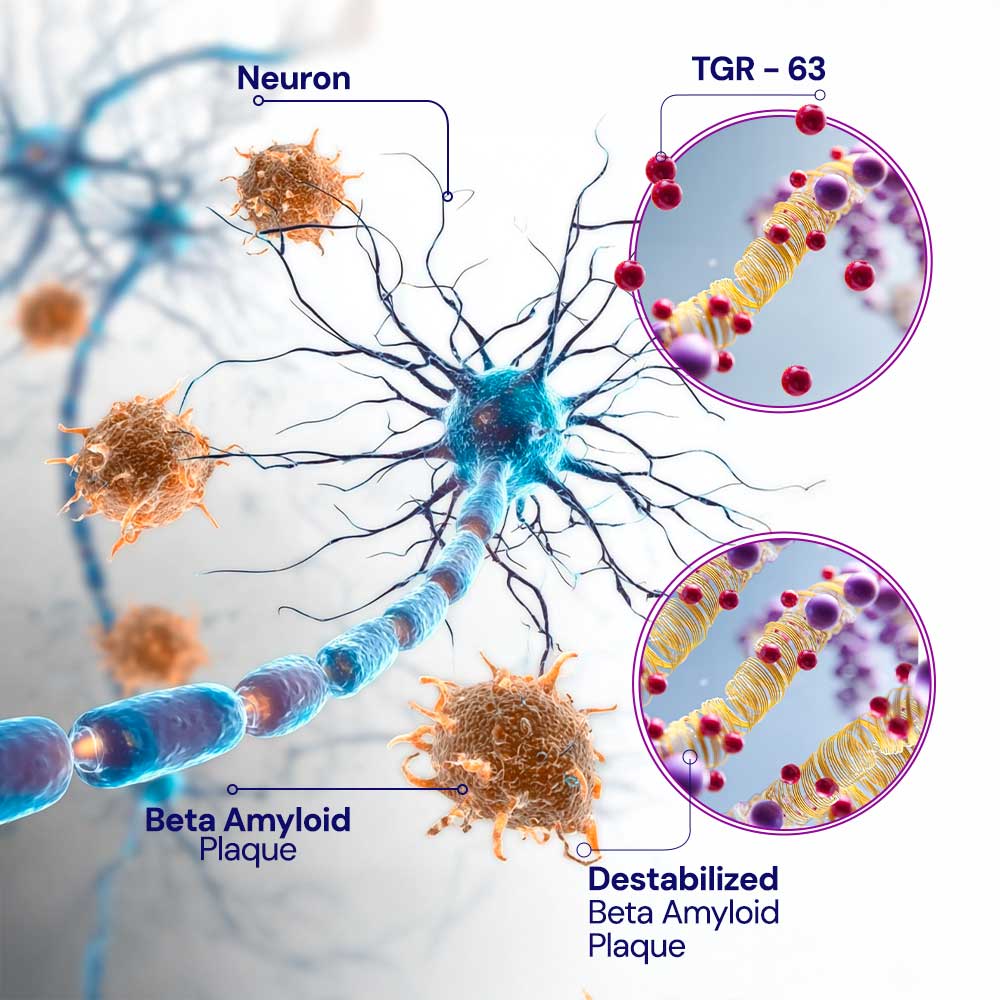
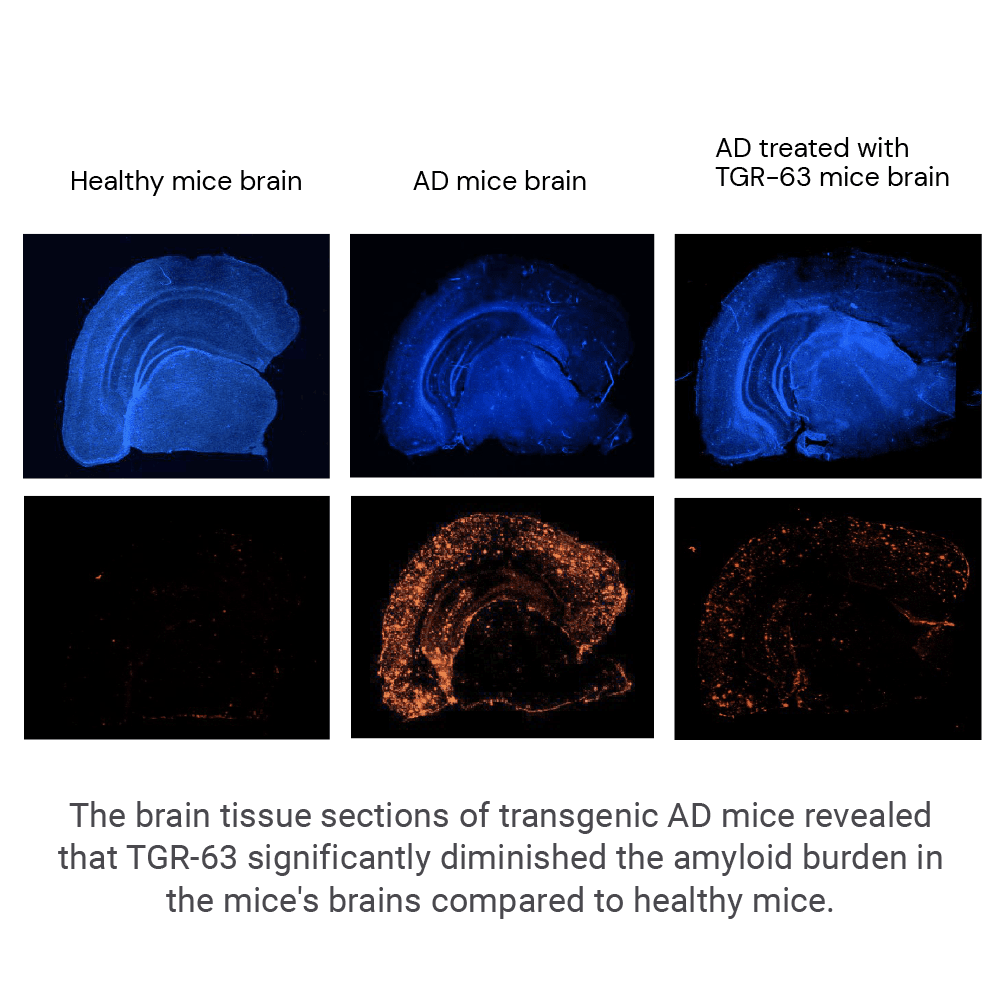
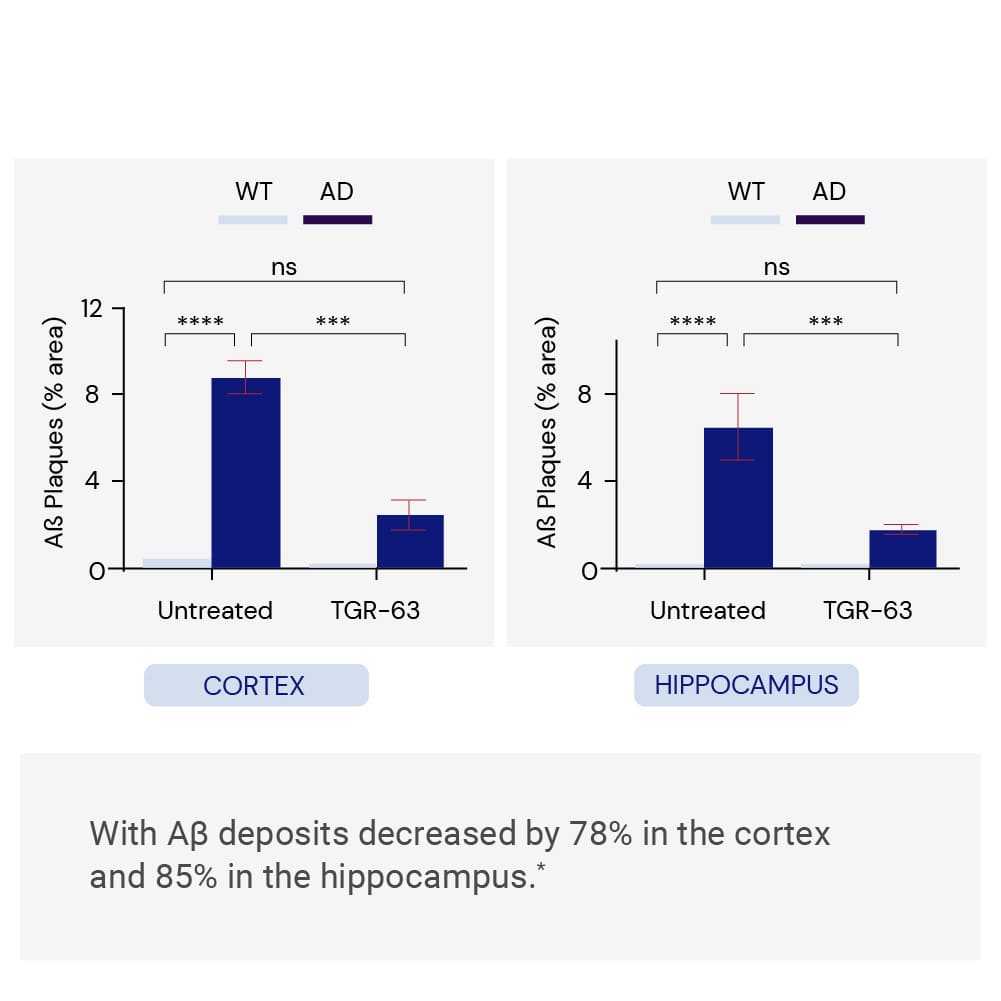
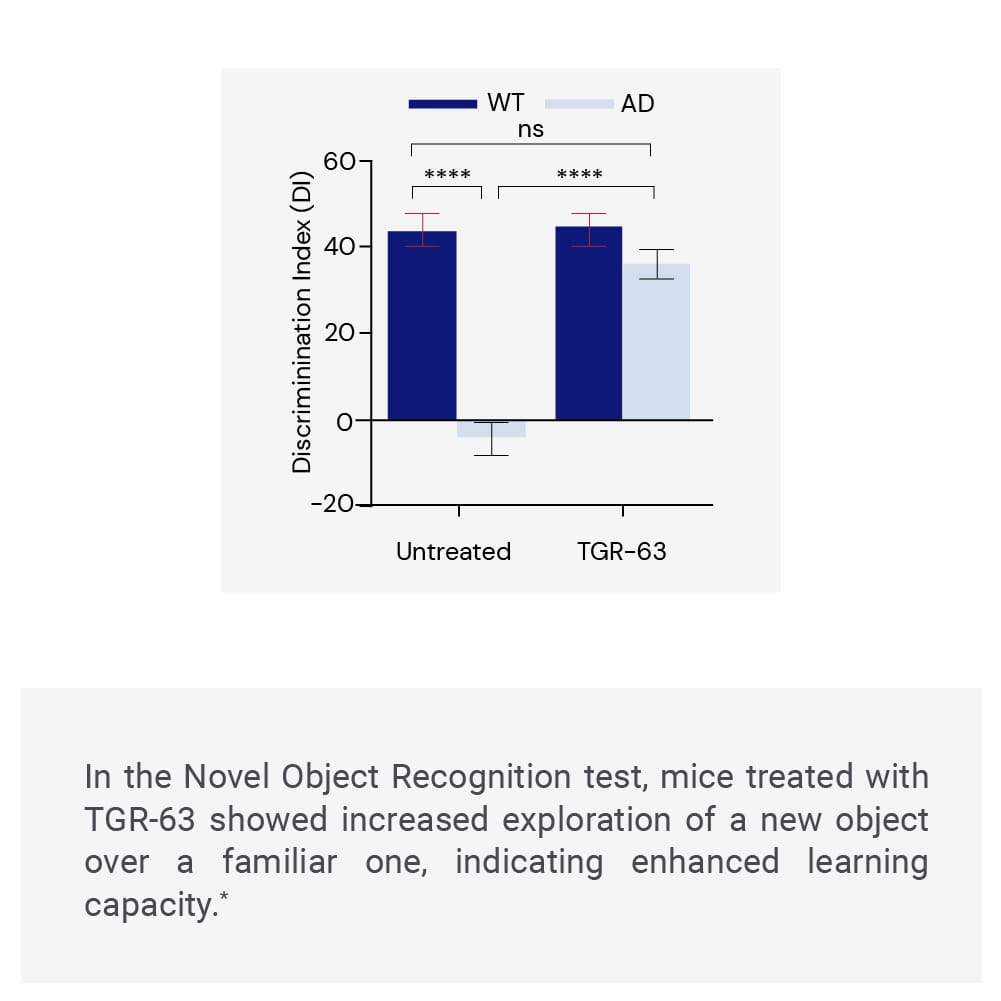
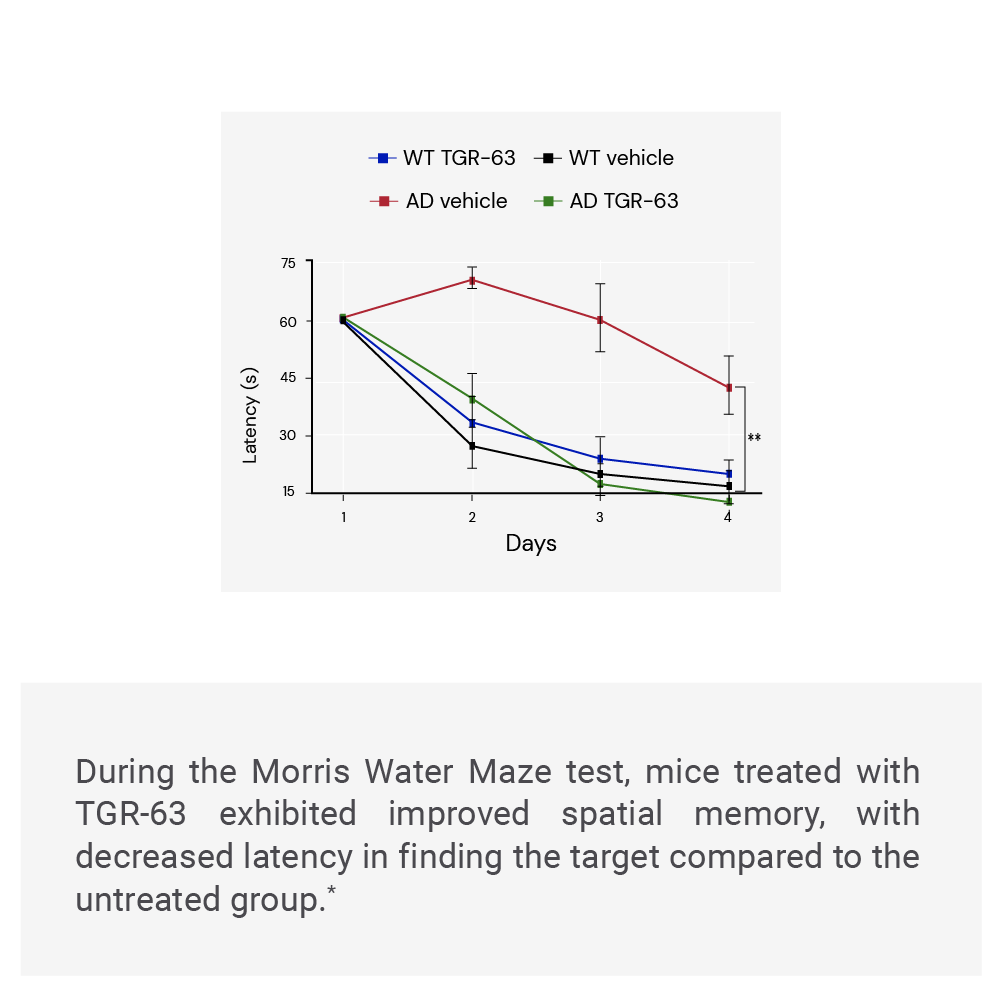
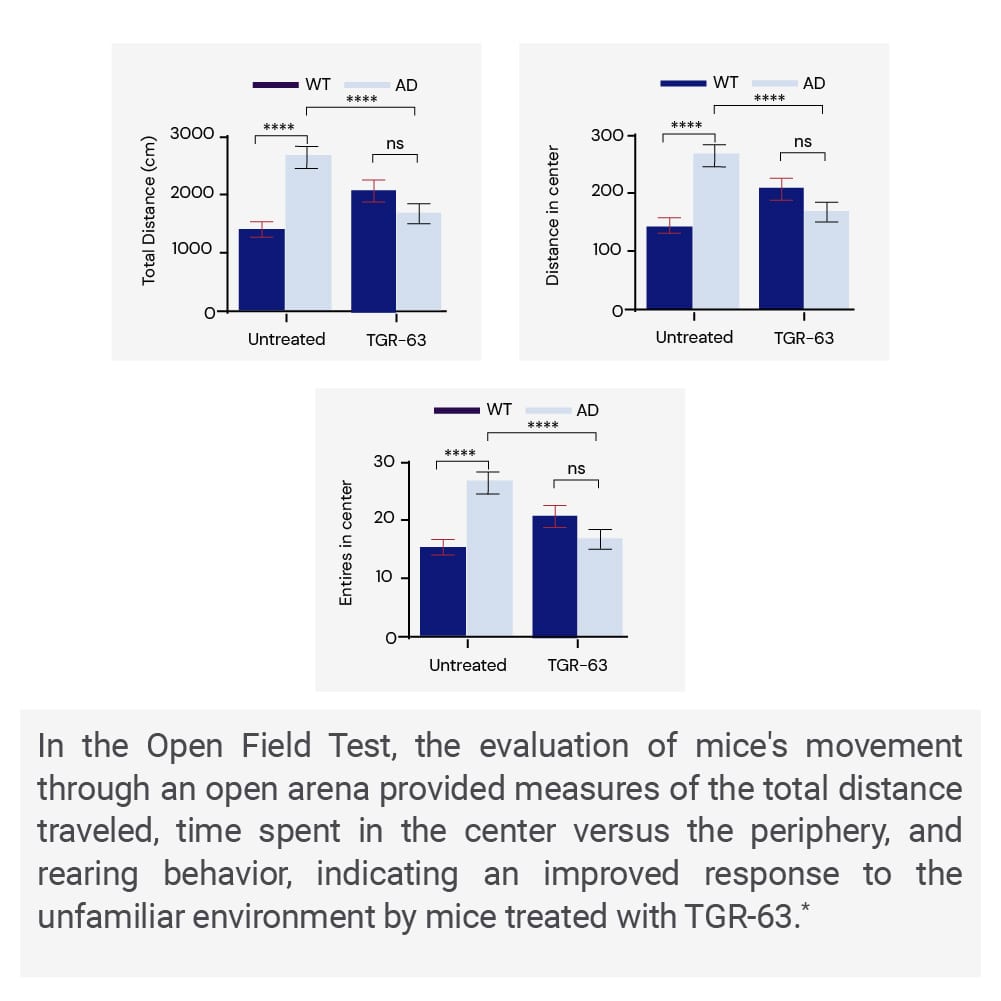
A synthetic small molecule, rationally designed to inhibit amyloid plaque aggregation in the neuronal tissue through previously unexplored binding sites, demonstrating exceptional blood–brain barrier penetration and preclinical behavioral efficacy.
How TGR-63 Works
TGR-63 interacts directly with amyloid-beta peptides, destabilizing the plaques by breaking bonds that hold them together. This process transforms toxic aggregates into harmless structures that the body can safely metabolize, addressing the root pathology of Alzheimer’s disease.
Computational Studies:
A Plausible Mode of Action
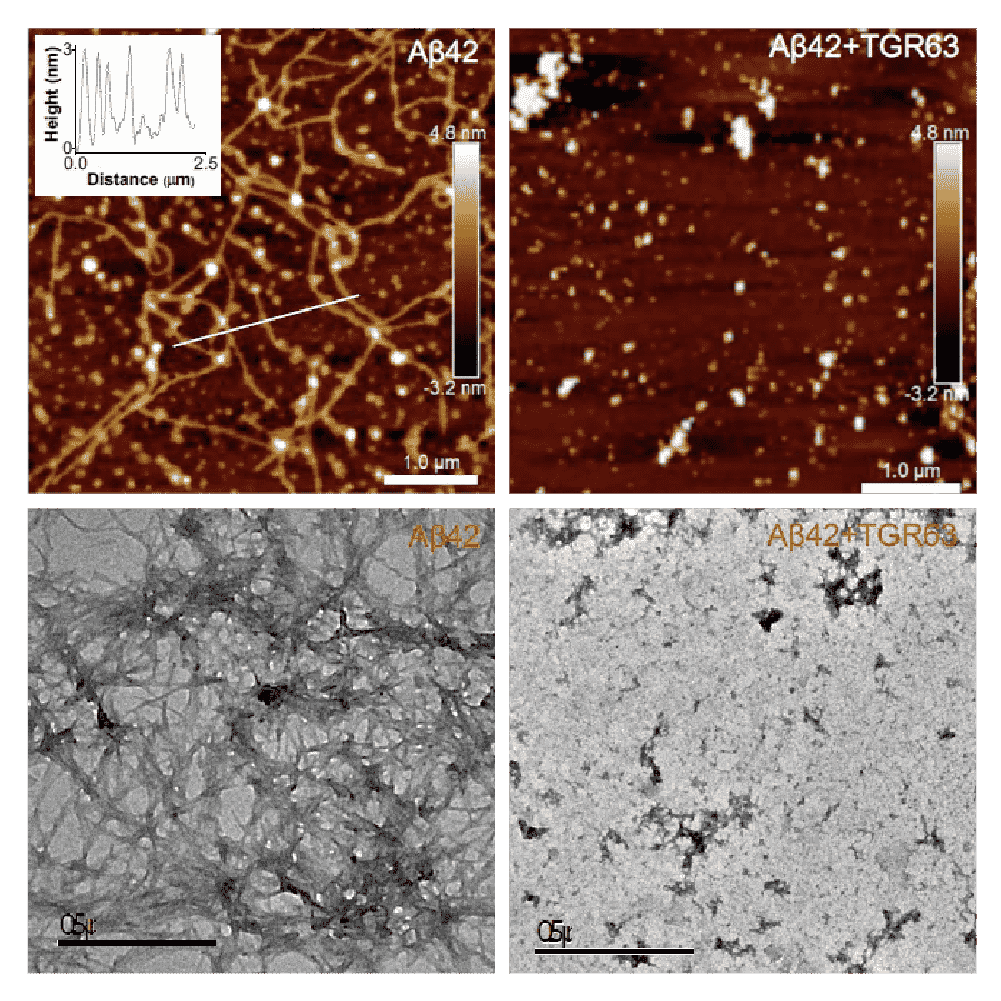
TGR-63 also shows high affinity for the Aß42 peptide, compromising its tertiary structure and promoting the formation of globular non-toxic structures
Tracing the Origins:
The Development
of TGR-63 Compound
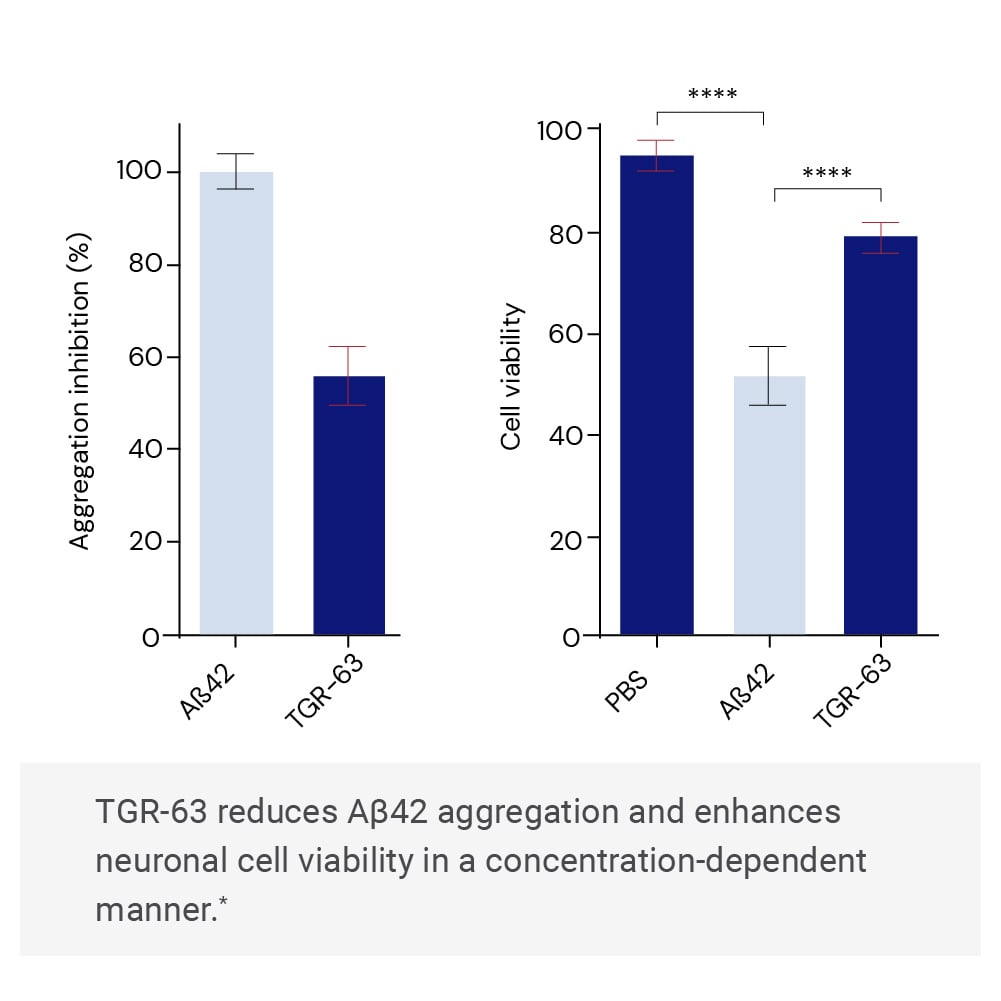
It was licensed from the Jawaharlal Nehru Centre for Advanced Scientific Research in India and developed by Prof. T Govindaraju, whose research group designed several naphthalene monoimide compounds. They analyzed their capacity to inhibit Aβ aggregation, cytotoxicity, and neuronal rescue functionality, in which TGR-63 excelled.