
IGC-AD1 Phase I
Clinical Trial
Assessing the safety, tolerability, and clinical impact of IGC-AD1, an oral THC-based therapy, on neuropsychiatric symptoms in Alzheimer’s disease.
Safe and well tolerated; may reduce agitation and
caregiver distress in Alzheimer’s disease.
Objective
Overall NPS Reduction
Caregiver distress and neuropsychiatric symptoms (NPS), including agitation, may improve.
Objective
Overall Safety: Not Black Boxes Warnings
In a Phase 1 clinical trial, IGC-AD1 was well tolerated across three dosage levels.
Double-blind study evaluating multiple dose levels of IGC-AD1.
Mild-to-moderate Alzheimer’s patients were randomized to receive ascending doses of IGC-AD1 or placebo for 14 days per dose, with assessment of safety and symptom changes, following the protocols registered on ClinicalTrials.gov.
Study design
Multiple ascending dose (MAD), three-cohort design with active and placebo groups, including defined duration and washout periods.
Demographics
Female: 69.2%
Male: 30.8%
Mean Age: 80.5 ± 5.7 years
Mean Weight: 147.7 ± 31.6 lb
Results on NPS
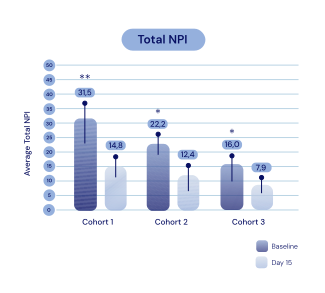
Neuropsychiatric Symptoms Measured by NPI Scores
Patients receiving IGC-AD1 showed improvement in neuropsychiatric symptoms (NPS) and caregiver distress.
Results on Agitation
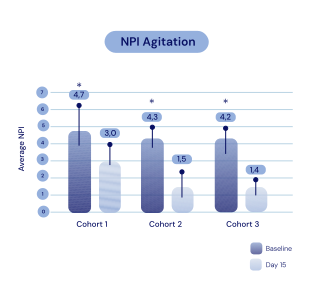
Agitation improved across all three dosage levels, with clinically and statistically significant reductions (p < 0.05).
Key Outcomes
Phase I Clinical Trial
Safety profile: No serious adverse events; IGC-AD1 was well tolerated across CYP2C9 genotypes, with no induced suicidal ideation.
Caregiver distress decreased: NPI-D scores reduced by 55% in the active group and 33% in placebo, indicating potential to ease care burden.
Reduction in agitation: The active group showed a 36% decrease in NPI Agitation scores versus 0% in placebo, suggesting clinical Benefit.