
By: Juan Manuel Orjuela, MD
Neuropsychiatrist
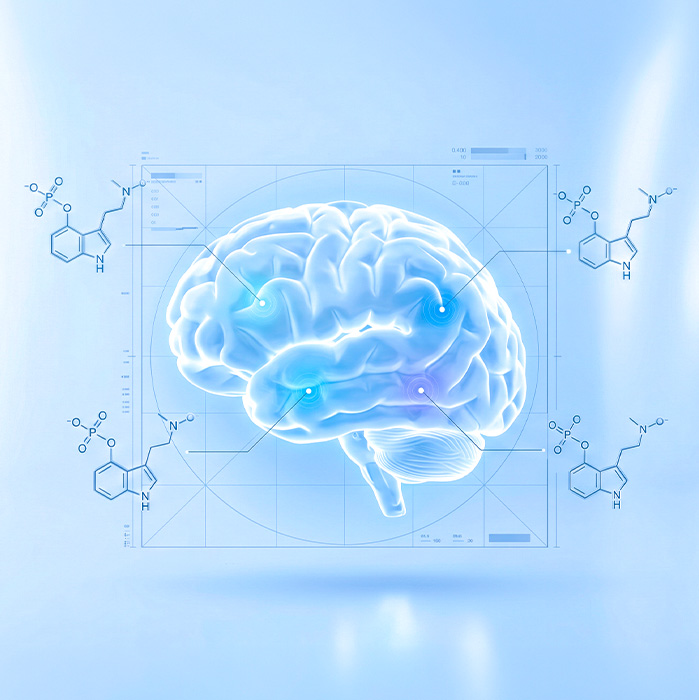
Psilocybin is the main active compound found in psilocybin mushrooms, commonly known as “magic mushrooms”, holds significant historical importance because of its ancestral use throughout history among pre-Hispanic and indigenous cultures¹.
Despite being banned in the 1970s under the Nixon administration due to its perceived lack of health benefits, psilocybin has recently re-emerged as a subject of scientific interest. The studies conducted by Dr. Ronald Griffiths at Johns Hopkins University, focusing on individuals dealing with terminal cancer and fear of dying, have shown encouraging results that suggest it may have a positive impact on mental health and the capacity to infuse new meaning to existence².
Psilocybin is typically consumed in two different ways: micro-doses and macro-doses. Micro-doses, or sub-perceptual doses (1-2 mg), have been associated with increased creativity, improved mood, and enhanced cognitive abilities3. However, these benefits have only been backed by subjective consumer reports and have been difficult to quantify due to the absence of controlled studies with active and placebo groups. When researchers have tried to measure the emotional and cognitive benefits of psilocybin using scales, results have been generally inconclusive4. Similarly, there is insufficient evidence to conclude that micro-doses of psilocybin have antidepressant and/or anxiolytic properties. Regardless, self-administered micro-dosing has skyrocketed among young people around the world3,5.
In contrast, macro-doses (15-25 mg) of psilocybin have shown therapeutic potential for people with refractory depression, addiction, and the fear of dying, often faced by people with terminal cancer6. Refractory depression refers to severe depressive symptoms that do not respond to two or more antidepressants at appropriate dosages within four to six weeks7. Even adjuvant therapies such as exercise, meditation, or psychotherapy prove ineffective. Approximately 30% of people with depression experience refractory depression7.
The Imperial College London Group, led by David Nutt and Robert Carhart-Harris has recently achieved promising insights by utilizing psilocybin macro-dosing in individuals with refractory depression, leading to positive and encouraging outcomes8. In this process, patients are carefully chosen following strict inclusion/exclusion criteria to receive macro-doses of psilocybin and be assessed by an interdisciplinary research team. The study typically excludes people with history of psychosis, bipolar affective disorder, or unstable cardiovascular disease. To reduce the risk of adverse events, psilocybin is not combined with antidepressants. Another important point is that patients only begin macro-dosing after participating in a couple of psychotherapy sessions, taking place in a specially designed office that minimizes visual stimulus and has music accompaniment. During the therapy sessions, one or two therapists are present with the patient, prepared to assist if needed (e.g., water, breathing exercises to relax, etc). In the days following the macro-dose intake, the patient and therapist analyze the experience and its significance in a debriefing session.

To get better treatment results, people must experience changes in their perception of time/space, self-awareness, a reduced sense of self-limitations and elevated mood. Sometimes, musical synesthesia may appear, a sensory perception phenomenon where music is visualized with dynamic colors within the realm of mental imagery9.
Interestingly, psilocybin’s therapeutic effects tend to manifest within two to seven days, whereas conventional antidepressants’ effects typically take an average of three to four weeks. Furthermore, research suggests that one or two doses of psilocybin can have antidepressant effects that last up to three to six months while conventional antidepressants require consistent daily doses (for a year on average) to achieve similar results9,10.
However, even though psilocybin is a naturally occurring compound, it is not entirely harmless. In some people, it can cause headaches, transient anxiety, and nausea. Some studies have even reported episodes of suicidal ideation, mania, psychosis, and severe depression among their participants. Many researchers have also warned that psilocybin may increase the risk of psychosis in patients with bipolar affective disorder 9,10.
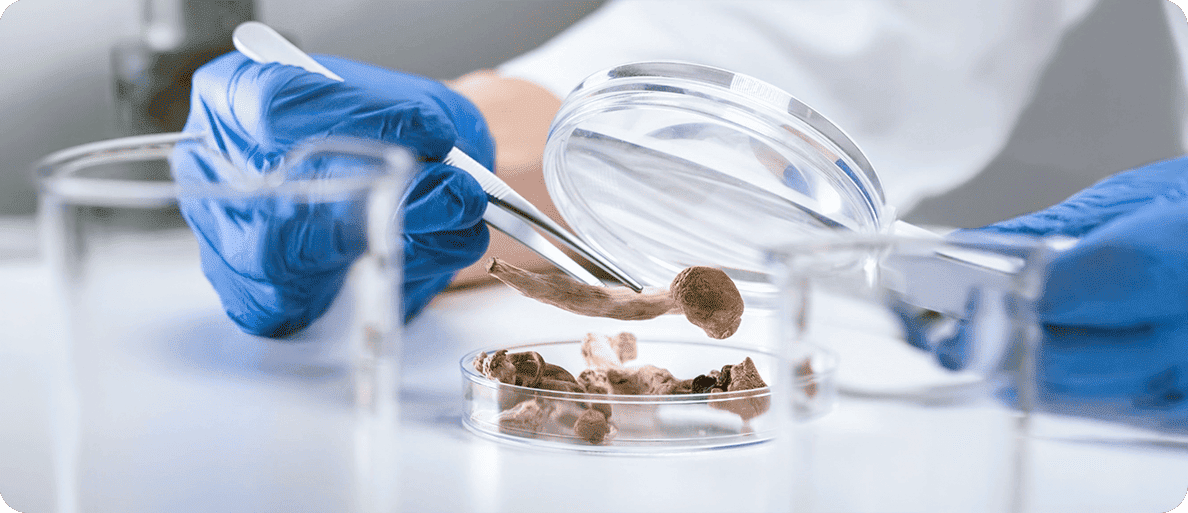
Just like any medication, it is important to accurately measure psilocybin’s potency, dosing, and possible contaminants. An important consideration when interpreting psychedelic research is that it is typically conducted with synthetic psilocybin. While this aids in maintaining patient safety and data consistency, the findings may not always apply to real-world scenarios. This is because dried psilocybin mushrooms vary in psilocybin content and may contain bacteria, other fungi, and heavy metals11,12. Therefore, maintaining patient safety and consistent dosage is much more challenging in practice than in controlled research conditions. Moreover, while research has shown promising outcomes, further investigation is required to confidently identify psilocybin’s drug interactions, maximum dosage, contraindications, and adverse effects on a broader scale involving hundreds of thousands of users,3.
In conclusion, growing evidence highlights the potential of psilocybin, a naturally occurring psychedelic compound found in certain mushrooms, to emerge as a therapeutic tool to treat mental health disorders. Its ability to induce profound and psychedelic experiences and influence brain connectivity and neuroplasticity, this implies that it could lead to long-lasting positive changes in mental well-being. However, further research is still needed to fully understand its therapeutic mechanisms and potential risks. Rigorous clinical trials and appropriate protocols can ensure its safety and establish it as a valuable tool for improving mental health treatments.
- Pepe M, Hesami M, de la Cerda KA, Perreault ML, Hsiang T, Jones AMP. A journey with psychedelic mushrooms: From historical relevance to biology, cultivation, medicinal uses, biotechnology, and beyond. Biotechnol Adv. 2023;69:108247. doi:10.1016/j.biotechadv.2023.108247
- Griffiths RR, Johnson MW, Carducci MA, et al. Psilocybin produces substantial and sustained decreases in depression and anxiety in patients with life-threatening cancer: A randomized double-blind trial. J Psychopharmacol. 2016;30(12):1181-1197. doi:10.1177/0269881116675513
- MacCallum CA, Lo LA, Pistawka CA, Deol JK. Therapeutic use of psilocybin: Practical considerations for dosing and administration. Front Psychiatry. 2022;13:1040217. Published 2022 Dec 1. doi:10.3389/fpsyt.2022.1040217
- Cavanna F, Muller S, de la Fuente LA, et al. Microdosing with psilocybin mushrooms: a double-blind placebo-controlled study. Transl Psychiatry. 2022;12(1):307. Published 2022 Aug 2. doi:10.1038/s41398-022-02039-0
- Bienemann B, Ruschel NS, Campos ML, Negreiros MA, Mograbi DC. Self-reported negative outcomes of psilocybin users: A quantitative textual analysis. PLoS One. 2020;15(2):e0229067. Published 2020 Feb 21. doi:10.1371/journal.pone.0229067
- Bellman V. Review of Psilocybin Use for Depression among Cancer Patients after Approval in Oregon. Cancers (Basel). 2024;16(9):1702. Published 2024 Apr 27. doi:10.3390/cancers16091702
- McIntyre RS, Alsuwaidan M, Baune BT, et al. Treatment-resistant depression: definition, prevalence, detection, management, and investigational interventions. World Psychiatry. 2023;22(3):394-412. doi:10.1002/wps.21120
- Nutt D, Erritzoe D, Carhart-Harris R. Psychedelic Psychiatry’s Brave New World. Cell. 2020;181(1):24-28. doi:10.1016/j.cell.2020.03.020
- Yu CL, Liang CS, Yang FC, et al. Trajectory of Antidepressant Effects after Single- or Two-Dose Administration of Psilocybin: A Systematic Review and Multivariate Meta-Analysis. J Clin Med. 2022;11(4):938. Published 2022 Feb 11. doi:10.3390/jcm11040938
- Watford T, Masood N. Psilocybin, an Effective Treatment for Major Depressive Disorder in Adults – A Systematic Review. Clin Psychopharmacol Neurosci. 2024;22(1):2-12. doi:10.9758/cpn.23.1120
- Falandysz J, Mędyk M, Treu R. Bio-concentration potential and associations of heavy metals in Amanita muscaria (L.) Lam. from northern regions of Poland. Environ Sci Pollut Res Int. 2018;25(25):25190-25206. doi:10.1007/s11356-018-2603-0
- Qin G, Liu J, Zou K, et al. Analysis of heavy metal characteristics and health risks of edible mushrooms in the mid-western region of China. Sci Rep. 2024;14(1):26960. Published 2024 Nov 6. doi:10.1038/s41598-024-78091-1